


You're searching "business broker near me" because proximity feels important.
You assume someone in your city understands your market better than an outsider.
Here's what most North Carolina business owners miss: location matters far less than you think: and focusing on it might cost you six figures.
I've worked with sellers across Charlotte, Raleigh, and Wilmington who picked brokers based solely on zip codes. Some got lucky. Most left money on the table because they optimized for the wrong variable.
Let me show you what actually determines whether your business sells quickly and at the right price.
The Geography Trap Most Sellers Fall Into
When you start planning your exit, the first instinct is to Google "business broker Charlotte NC" or "business broker Raleigh NC."
Makes sense on the surface.
You want someone who knows your city: the economic conditions, the local buyer pool, the neighborhood dynamics that make your business valuable. Someone who can meet face-to-face without burning half a day on I-40.
But here's what I've seen happen repeatedly: Sellers choose brokers who live 15 minutes away but have zero experience selling businesses in their industry or price range.
Geography becomes a comfort metric that distracts from competence metrics.

A Charlotte restaurant owner once told me he picked a local broker because "they knew the Queen City market." The broker had restaurant experience: but only with franchises under $500K. This seller's independent concept was worth $2.3 million. Different universe entirely.
The sale stalled for eight months. Wrong buyer targeting. Wrong valuation approach. Wrong everything: except the broker's area code.
What Actually Drives a Successful Business Sale
I've watched hundreds of transactions across North Carolina. The deals that close fast and at premium multiples share three characteristics: and location isn't one of them.
First: Industry-specific expertise. A broker who has sold twelve landscaping companies understands buyer psychology, valuation multiples, and deal structures for that sector. A generalist broker in your same city doesn't.
Second: Buyer network depth. The perfect buyer for your business might live in Denver or Dallas. Modern M&A is national: even for mid-market companies. Brokers with proprietary databases and relationships across state lines bring more qualified buyers to the table.
Third: Transaction size specialization. Selling a $1.5 million business requires different skills than selling a $15 million one. Marketing channels differ. Buyer qualifications differ. Deal structures differ completely.
A broker in Wilmington who specializes in businesses valued between $2-10 million will outperform a Raleigh broker who mostly handles sub-$500K transactions: even if your business sits in Raleigh.
The business broker services we provide focus on these competence variables first, geography second.
When Local Market Knowledge Actually Matters
I'm not saying location is irrelevant. It's just overweighted in most sellers' decision frameworks.
Local expertise becomes genuinely valuable in three specific scenarios:
Regulatory environment familiarity. North Carolina has particular licensing requirements, tax structures, and compliance considerations. A broker who regularly works in-state navigates these faster than someone flying in from another region.
Regional buyer pool for certain industries. If you're selling a small retail operation or service business where the buyer will operate locally, a broker with deep Charlotte or Raleigh connections matters more.
Economic trend awareness. Charlotte's banking sector growth affects business values differently than Wilmington's tourism economy or the Research Triangle's tech ecosystem. Brokers who track these patterns can position your business more strategically.

But notice something about these scenarios: they're about North Carolina expertise, not necessarily about sharing your exact zip code.
A business broker who covers the entire state and understands regional variations brings more value than someone who only knows one city intimately. The firm at VisionFox demonstrates this approach: combining local market knowledge with broader reach.
The Buyer Geography Myth You Need to Abandon
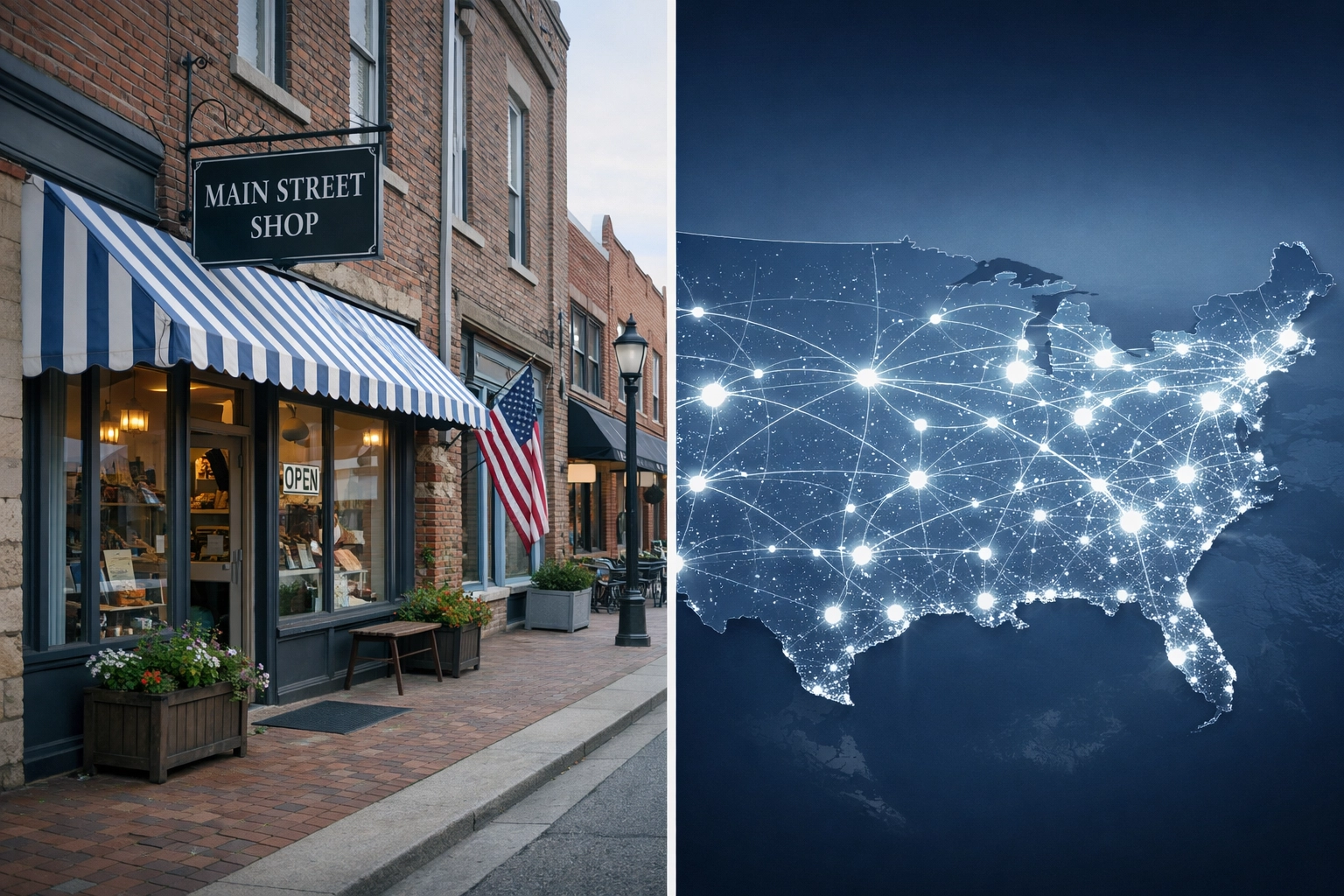
Here's a reality that surprises most sellers: your buyer probably won't come from your city.
Maybe not even your state.
I've seen Durham businesses sell to buyers from Seattle. Wilmington companies acquired by investors from Chicago. Charlotte operations bought by executives relocating from the Northeast specifically because they want to live in North Carolina.
The data backs this up. National brokers report that 60-70% of their successful transactions involve buyers from outside the seller's immediate region. The internet eliminated geographic constraints on business acquisition searches.
Your ideal buyer searches online for businesses matching their acquisition criteria: industry, revenue range, growth trajectory, management structure. They don't filter by "within 50 miles of my current address."
This is why marketing reach matters exponentially more than broker proximity.
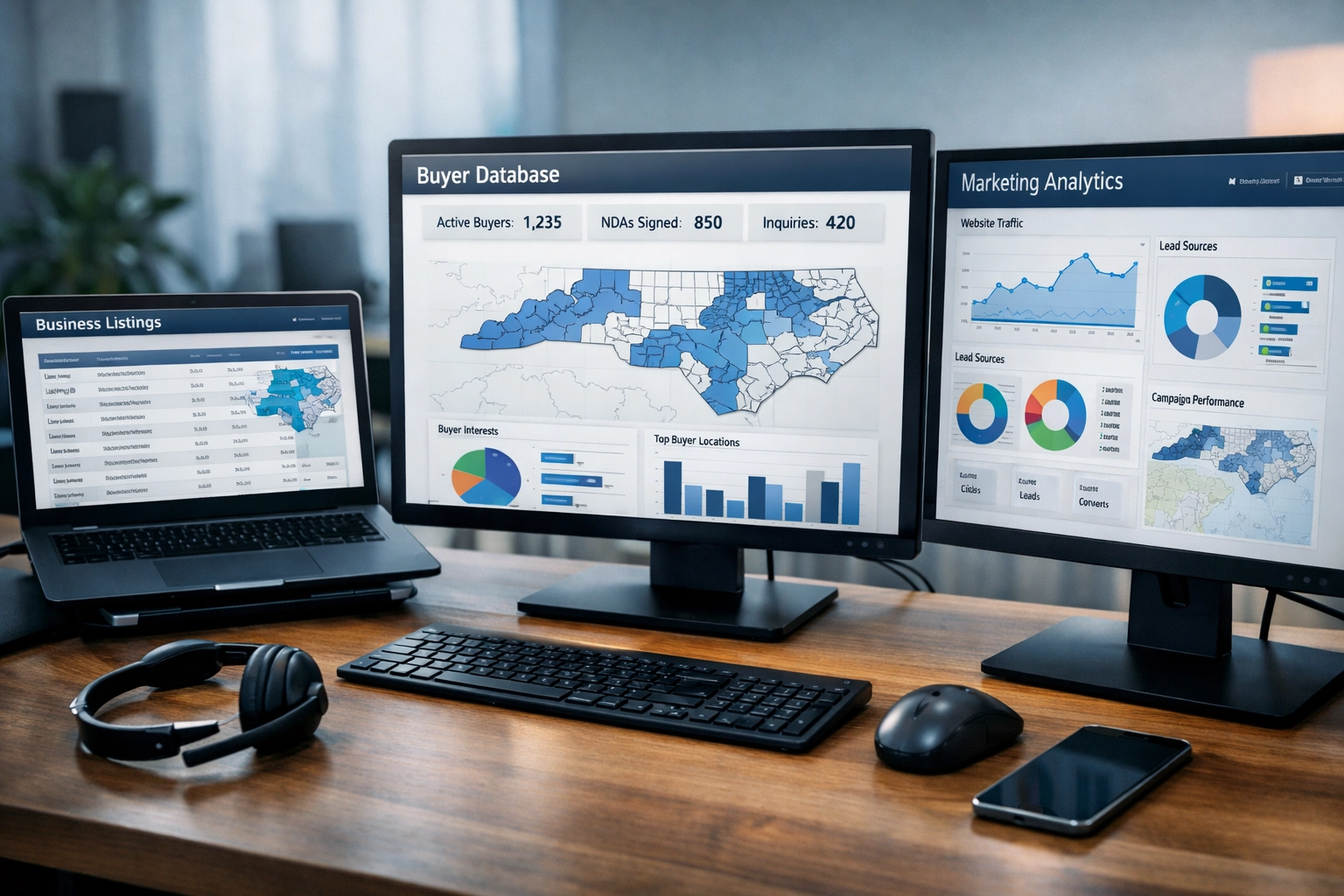
A Charlotte-only broker with 400 contacts in their database can't compete with a firm that markets to 12,000 pre-qualified buyers across the Southeast: even if that firm's nearest office sits in Greensboro.
The Charlotte-specific services from VisionFox illustrate this balance: local presence combined with regional and national buyer networks.
The Questions That Actually Matter When Choosing a Broker
Stop asking "How close is your office?" Start asking these instead:
"How many businesses in my industry and price range have you sold in the last 24 months?" Specific numbers matter. Vague answers are red flags.
"What's your buyer database size, and how do you market listings?" You want proprietary systems, not just posting on BizBuySell and hoping.
"What's your average time to close?" Industry averages run 6-9 months for lower middle market deals. If they're consistently longer, find out why.
"Can you show me three comparable transactions you've closed in North Carolina?" They should demonstrate familiarity with state-specific considerations without being geographically limited.
"What's your approach to business valuation?" Cookie-cutter multiples indicate inexperience. Detailed analysis of your specific drivers shows sophistication.
Notice none of these questions involve measuring distance on Google Maps.
Charlotte, Raleigh, Wilmington: or Statewide?
The smartest move is choosing a business broker who serves all major North Carolina markets rather than one locked into a single city.
Why?
Flexibility. If the perfect buyer for your Charlotte business lives in Asheville, a statewide broker already has that relationship.
Comparison data. Brokers working across multiple North Carolina cities see pricing trends and buyer behavior patterns that city-specific brokers miss.
Resource allocation. Firms serving the entire state invest more in marketing infrastructure, legal support, and technology platforms because they're spreading costs across a larger transaction volume.
I've seen this play out repeatedly. The Wilmington business owner who works with a statewide firm often gets better outcomes than the Charlotte seller who picked the broker down the street.
Scale creates capability. Capability creates results.
The Real Competitive Advantage in 2026
Business brokerage has fundamentally changed in the last five years.
AI-powered valuation tools. Automated buyer matching systems. Virtual due diligence platforms. Digital closing processes.
The brokers winning in this environment aren't the ones closest to your office: they're the ones leveraging technology to access buyers everywhere while maintaining deep expertise in specific transaction types.
This is particularly relevant in North Carolina's current market. With Charlotte ranking among the fastest-growing metro areas in the country and the Research Triangle attracting tech talent, buyer interest in North Carolina businesses has never been higher.
But capturing that interest requires sophisticated marketing and buyer vetting: not just local handshakes.
A broker who understands both the traditional relationship aspects and modern digital acquisition channels delivers exponentially better results than someone relying solely on their Rolodex from 2005.
Making the Decision: Proximity vs. Performance
Here's my recommendation after years of watching these decisions play out:
Create a shortlist of brokers based on competence factors: industry experience, transaction size specialization, buyer network depth, and marketing sophistication.
Then: and only then: consider location as a tiebreaker if two brokers are genuinely equivalent on the metrics that matter.
You'll probably find the best-qualified broker operates across multiple North Carolina cities rather than being exclusively local to yours.
That's fine. Better than fine, actually.
Modern communication makes geography nearly irrelevant for the working relationship. You'll spend most of your time on video calls and email anyway. The two or three in-person meetings that matter can happen regardless of whether your broker is based 10 miles away or 150 miles away.
What you can't overcome is choosing a broker who lacks the right expertise, buyer networks, or transaction experience. Those deficiencies compound throughout a 6-9 month sale process and directly impact your final purchase price.
Your Next Step
If you're seriously considering selling your North Carolina business in the next 12-24 months, stop searching "business broker near me" and start evaluating based on transaction competence.
Request a confidential business valuation to understand what your company is worth: and what it takes to maximize that value in today's market.
Share this with another North Carolina business owner who's thinking about their exit strategy. The brokers they choose now will determine whether they leave with the payout they've earned or settle for what's convenient.