

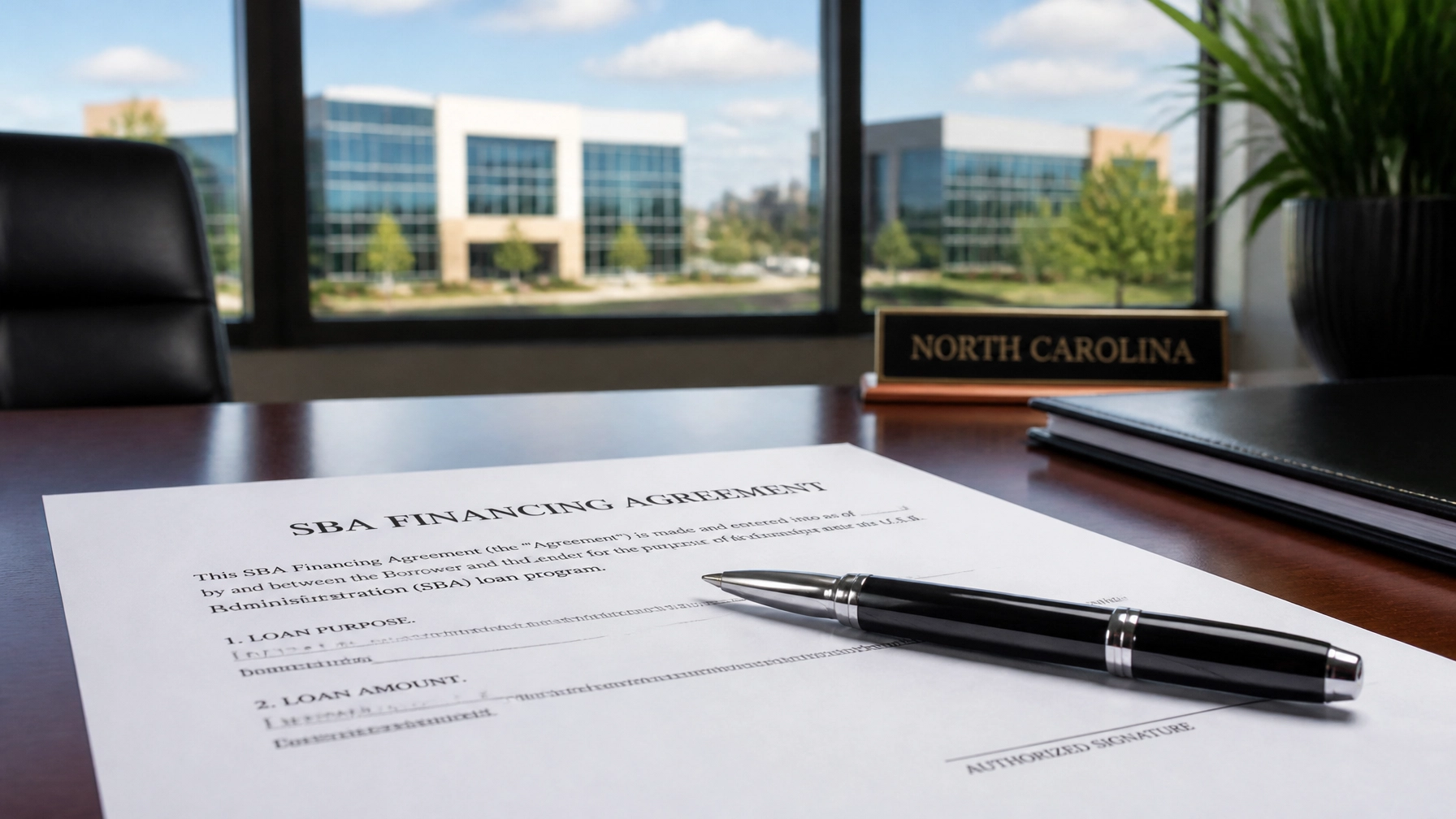
Small business sales in North Carolina are increasingly driven by SBA financing.
Buyers expect your financial records to withstand the extreme scrutiny of federal lending standards.
You must prepare your business for a deep-dive audit to ensure a successful exit.
SBA financing is the engine behind the majority of small-to-mid-sized business transactions today. When you decide to sell a small business, you aren't just selling to a buyer: you are selling to their lender.
Most buyers in the $1M to $5M revenue range lack the liquid capital to purchase a company outright. They rely on the SBA 7(a) loan program to bridge the gap. This program allows for lower down payments and longer repayment terms, which makes your business more accessible to a wider pool of qualified individuals.
Here is the reality. If your business is not SBA-financeable, you have effectively eliminated 80% of your potential buyer pool.
The Lender is the Silent Partner
In every SBA-backed deal I’ve seen, the lender acts as a secondary gatekeeper. They do not care about your "potential" or the growth you think the next owner will achieve. They care about historical cash flow.
Lenders look back at the last three years of your tax returns to ensure the business can pay for itself. This means the net income, plus specific "add-backs," must be enough to cover the new debt, pay the buyer a living wage, and leave a margin for error. In the industry, we call this the Debt Service Coverage Ratio (DSCR).
Clean Books are Not Optional
I worked with a business owner in the Triad who had a phenomenal service company but kept poor records. When a buyer brought an SBA lender to the table, the deal collapsed within two weeks. The lender couldn't verify the owner’s discretionary earnings because the personal and business expenses were too intertwined.

Start with a full audit of your financial statements.
Buyers expect to see three years of clean tax returns that match your internal profit and loss statements. If there is a discrepancy, the lender will default to the lower number. This will directly reduce the amount of financing available and, consequently, your purchase price.
Understanding the Buyer’s Equity Requirement
A common misconception among North Carolina sellers is that the buyer must bring 20% to 30% in cash. Under current SBA guidelines, a buyer can often secure a loan with as little as 10% equity.
However, the lender often asks the seller to participate in that 10% through a seller note. If a buyer puts down 5% in cash, the lender may require you to carry a 5% note.
The Seller Note Standby Rule
Here is a specific detail that surprises many owners. If your seller note is used to satisfy the buyer's minimum equity requirement, the SBA requires that note to be on "full standby" for at least 24 months.
This means you will not receive a single payment on that portion of the note for two years. I've seen sellers walk away from deals because they didn't understand this requirement upfront. You must be prepared for the fact that a portion of your exit proceeds will be deferred to satisfy the lender's risk appetite.
Buyer Expectations in the North Carolina Market
North Carolina is currently one of the most active markets for business acquisitions in the country. From the high-growth corridors of Charlotte to the research hubs in Raleigh, buyers are looking for stability.

Buyers are looking for "turn-key" operations.
They expect a transition period where you remain involved to train them. In most SBA deals, a 30-to-90-day transition period is standard. If you plan to move to the coast the day after closing, you will likely struggle to find a lender willing to fund the deal.
The Quest for a "Business Broker Near Me"
Many owners start their journey by searching for a business broker near me to help navigate these complexities. While local knowledge of the North Carolina economy is valuable, the most important factor is the broker's experience with SBA lending structures.
A qualified advisor will "pre-screen" your business with lenders before you ever go to market. This prevents the heartbreak of finding a great buyer only to have the bank reject the deal two months later. At Vision Fox Business Advisors, we emphasize this preparation phase because it protects your time and your confidentiality.
Geographic Reach and Confidentiality
While your business might be in Greensboro or Wilmington, your buyer could be coming from Atlanta, New York, or California. The SBA program is federal, which allows for a national pool of buyers to look at North Carolina companies.
Working with an advisor who understands the regional market but has a broad reach is essential. For instance, our work on the Vision Fox Charlotte-NC page connects local sellers with a diverse group of investors who are specifically targeting the Queen City’s economy.
The Importance of Professional Valuation
Before you list your business, you need an SBA-compliant valuation. The lender will eventually order their own third-party appraisal, and if your asking price is significantly higher than that appraisal, the deal will fail.
I recommend that every seller obtain a professional valuation that mirrors the methods used by banks. This sets a realistic expectation and provides a roadmap for what needs to be improved to reach your target exit price. You can find more resources on this through Vision Fox Business Advisors' North Carolina page.

Next, evaluate your management structure.
SBA lenders are wary of "owner-dependent" businesses. If the company cannot function for a week without you, it is a high-risk investment. Start delegating key responsibilities to your staff at least 12 to 18 months before you plan to sell.
A business that can run itself is worth more. It passes the lender's "continuity of operations" test and gives the buyer confidence that they can successfully take over the helm.
Finalizing the Deal
The closing process for an SBA loan typically takes 45 to 60 days once the underwriter has the full package. During this time, the buyer will be in your office, the appraiser will be looking at your equipment, and the bank will be digging into your customer contracts.
Maintain your focus on the business during this phase. I have seen deals fall apart in the eleventh hour because the owner checked out and sales dropped during the due diligence period. The bank monitors your performance up until the day the wires are sent.
Contact Vision Fox Business Advisors today to begin the process of valuing and preparing your North Carolina business for an SBA-backed sale.
Share this guide with a fellow business owner to help them navigate the complexities of the North Carolina business market.
{“@type”:”BlogPosting”,”image”:”https://cdn.marblism.com/6d1keJ3wpn6.webp”,”author”:{“name”:”Penny”,”@type”:”Person”},”@context”:”https://schema.org”,”headline”:”SBA Financing and Buyer Expectations in NC”,”keywords”:”sell a small business, business broker near me, SBA financing NC, North Carolina business sale”,”publisher”:{“logo”:{“url”:”https://bizbrokersnorthcarolina.com/wp-content/uploads/2024/01/logo.png”,”@type”:”ImageObject”},”name”:”Biz Broker North Carolina”,”@type”:”Organization”},”description”:”An educational guide for North Carolina business owners on how SBA financing affects the process of selling a small business and what buyers expect during the sale.”,”datePublished”:”2026-07-19″,”mainEntityOfPage”:{“@id”:”https://bizbrokersnorthcarolina.com/sba-financing-buyer-expectations-nc”,”@type”:”WebPage”}}